Attic Mold Removal in Tampa, FL
Mold on the attic sheathing usually means a ventilation or roof-leak problem. We remove it and fix the cause.
Attic Mold in Tampa
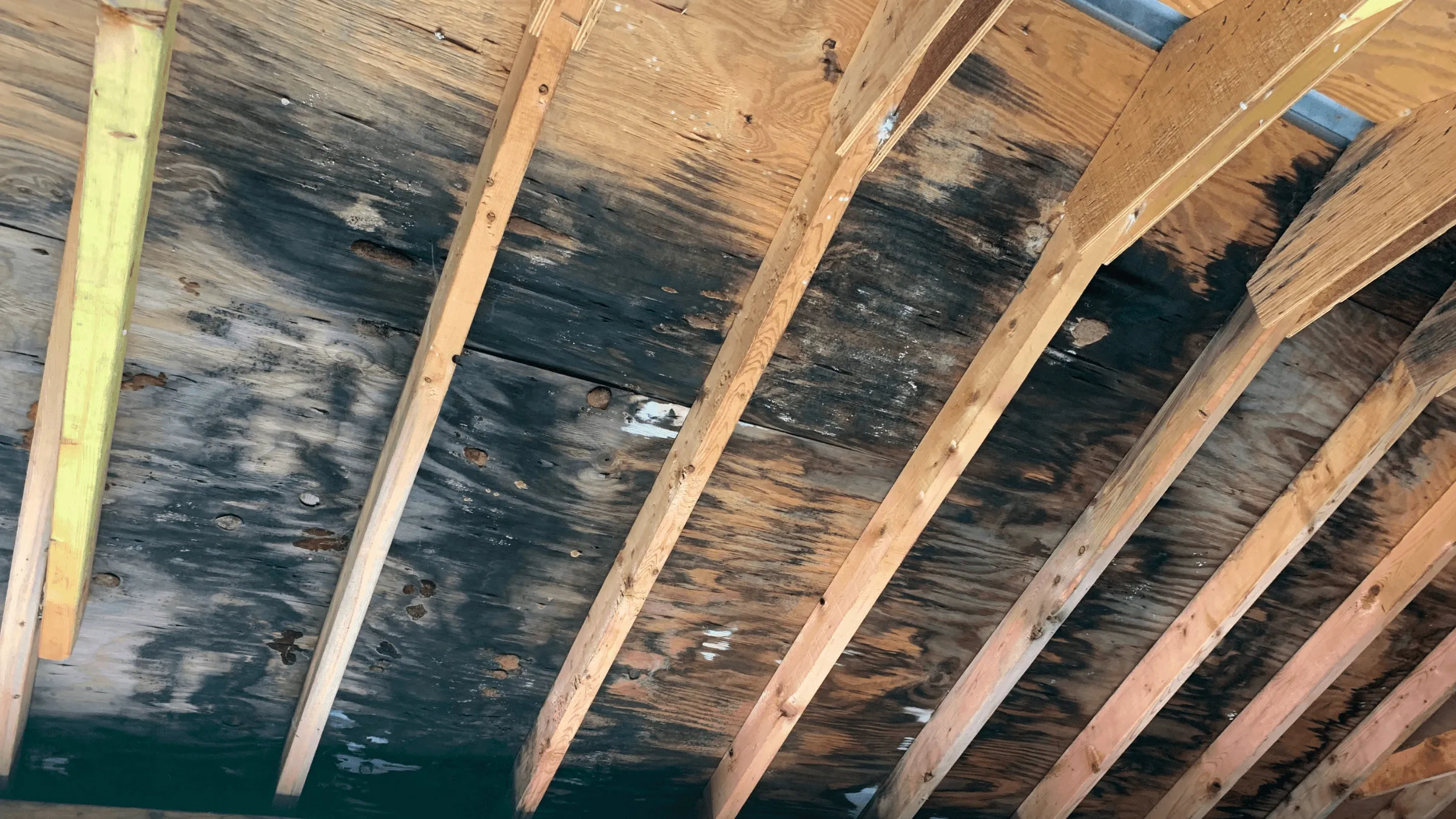
Attic mold is one of the most common problems we find on Tampa Bay homes, and it almost always comes down to one of two things: a roof or flashing leak, or an attic that cannot breathe. In our climate, a poorly ventilated attic turns into a hot, humid box where moisture condenses on the underside of the roof sheathing and feeds mold across the plywood. We remove attic mold and, just as important, fix why it grew. We treat or remove affected sheathing and materials, HEPA-vacuum and apply an appropriate treatment, clear out contaminated insulation where needed, and then address the ventilation — soffit and ridge venting, blocked baffles, bath fans dumping humid air into the attic, or a roof leak that needs sealing. Cleaning attic mold without fixing the airflow or the leak is a guarantee it comes back, so we treat the cause as part of the job, not as an afterthought.
Mold remediation in Tampa
Tampa is where we do most of our work, and the housing here is a perfect storm for mold. The bungalows and craftsman homes of Hyde Park, Palma Ceia, and Seminole Heights are nearly a century old, many sitting over crawl spaces that trap our humidity. Newer South Tampa rebuilds and the subdivisions out toward New Tampa run on slabs with tight construction and AC systems that sweat all summer. Across all of it, the climate is the constant: high humidity from spring through fall, daily summer storms, hurricane-season intrusion, and air conditioning running nine or ten months a year. We see mold behind drywall after slow plumbing leaks, on attic sheathing in homes that cannot breathe, around AC handlers and air returns, and in the crawl spaces under the older neighborhoods. We inspect, test, contain, remove, and repair residential mold all over Tampa — Hillsborough River neighborhoods, the historic districts, and the newer suburbs alike. Tell us where you are seeing or smelling it, and we will give you a straight answer, an honest scope, and a crew that knows how mold behaves in a Tampa home.
- Roof sheathing and framing treated in place where possible
- Contaminated insulation removed and replaced as needed
- HEPA vacuuming and appropriate treatment of affected wood
- Ventilation diagnosed — soffit, ridge, baffles, and bath fans
- Roof and flashing leaks identified as the moisture source
- We fix the cause so the attic stays dry
Need attic mold elsewhere? See all of our Tampa services or attic mold across Tampa Bay.
Attic Mold in Tampa
Tell us what’s happening and we’ll call you back — local Tampa service.
Areas We Cover in Tampa
From the historic districts to the newest subdivisions — if it’s in or around Tampa, we come to your property.
- South Tampa
- Seminole Heights
- Hyde Park
- New Tampa
- Westshore
- Tampa Heights
Common Mold Issues in Tampa
The mold problems we see most around here — and how we handle them.
Historic bungalows over crawl spaces
Seminole Heights, Hyde Park, and Tampa Heights are full of older homes built over crawl spaces, and in our humidity those spaces collect damp air that condenses on the joists and subfloor. The result is mold under the house and a musty smell rising into the living areas — a pattern we see constantly in Tampa’s historic districts.
AC condensation in tight newer homes
Newer South Tampa rebuilds and New Tampa subdivisions are sealed tight and run heavy AC, and an oversized or poorly set system cools fast without pulling out enough humidity. That leaves moisture around air handlers, returns, and ductwork — a quiet, year-round mold source that has nothing to do with a leak.
Storm and hurricane-season intrusion
Tampa’s summer storms and hurricane season drive wind-blown rain into windows, around flashing, and through roof damage. Water that sits even a day in our heat starts mold fast, so post-storm intrusion is one of the most common reasons we get called out.
Attic Mold in Tampa — FAQs
Do you cover all of Tampa?
My older Tampa home smells musty but I don’t see mold — why?
Could my mold be coming from the air conditioning?
How did mold get in my attic if there’s no leak?
Does attic sheathing with mold have to be replaced?
Will it come back if you just clean it?
Also Serving Near Tampa
Need Attic Mold in Tampa?
Call now for a fast quote — we come to your property, inspect, and give you an honest plan.