Attic Mold Removal in Largo, FL
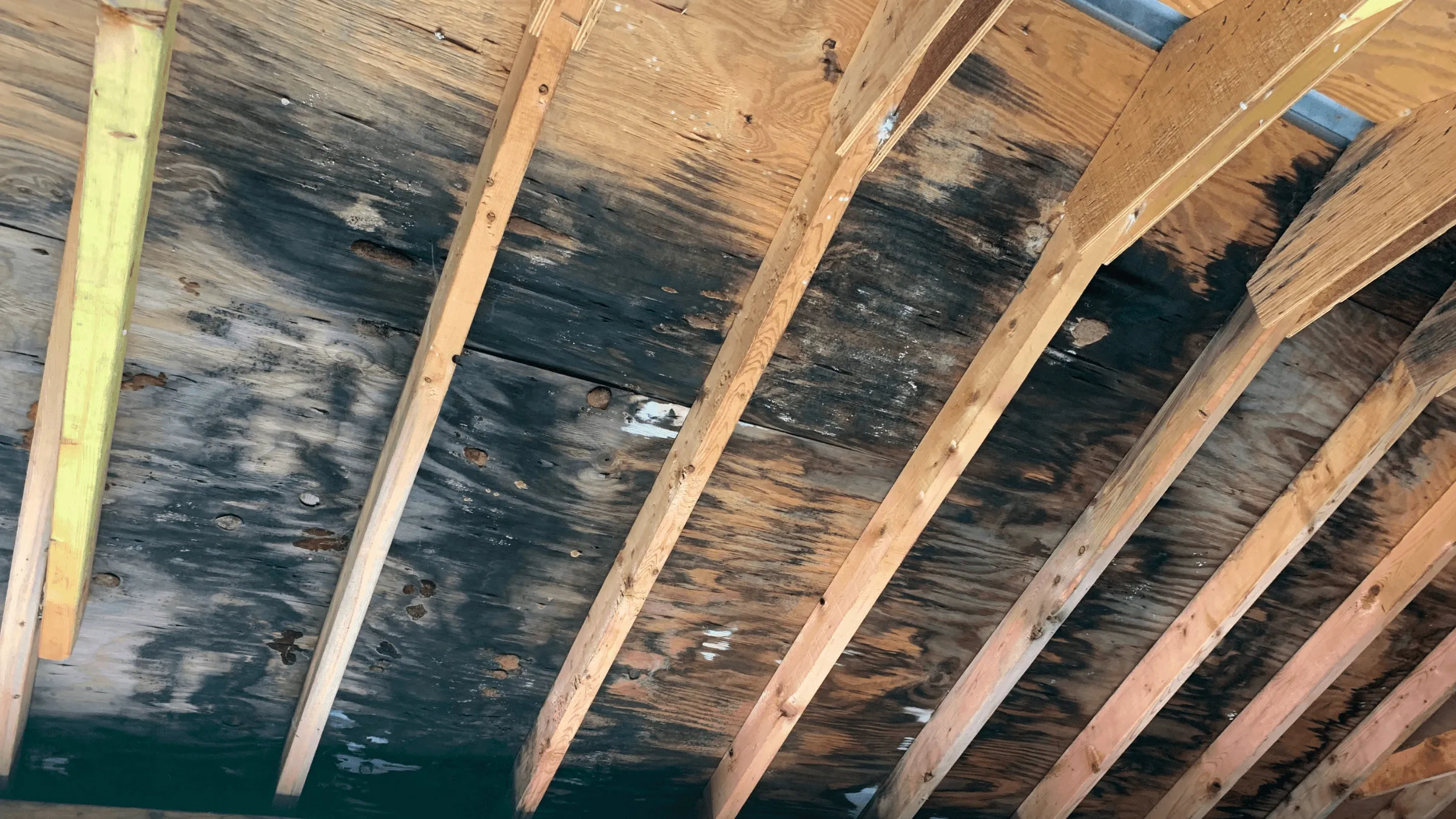
Mold on the attic sheathing usually means a ventilation or roof-leak problem. We remove it and fix the cause.
Attic Mold in Largo
Attic mold is one of the most common problems we find on Tampa Bay homes, and it almost always comes down to one of two things: a roof or flashing leak, or an attic that cannot breathe. In our climate, a poorly ventilated attic turns into a hot, humid box where moisture condenses on the underside of the roof sheathing and feeds mold across the plywood. We remove attic mold and, just as important, fix why it grew. We treat or remove affected sheathing and materials, HEPA-vacuum and apply an appropriate treatment, clear out contaminated insulation where needed, and then address the ventilation — soffit and ridge venting, blocked baffles, bath fans dumping humid air into the attic, or a roof leak that needs sealing. Cleaning attic mold without fixing the airflow or the leak is a guarantee it comes back, so we treat the cause as part of the job, not as an afterthought.
Mold remediation in Largo
Largo sits in the middle of the Pinellas peninsula between Clearwater and St. Petersburg, one of the most densely built parts of the Tampa Bay area. Its housing is largely mid-century — slab homes and older bungalows from the postwar boom, many with flat or low-slope roofs and decades of repairs behind them. Wedged between the Gulf and the bay, Largo gets the full coastal humidity and high water table of the peninsula. We inspect, test, contain, remove, and repair residential mold throughout the Largo area. The recurring problems are aging flat roofs that leak slowly into ceilings and attics, older plumbing failing behind walls, and AC systems straining against the humidity in tightly closed homes. The dense, older housing stock means a lot of homes have layered repairs and hidden past leaks that quietly fed mold. We find the moisture source first — the roof, the pipe, the condensation — and correct it so the remediation actually holds. Tell us where you are seeing or smelling mold, and we will give you a straight, honest answer and a scope that fits the real problem, not the worst-case one.
- Roof sheathing and framing treated in place where possible
- Contaminated insulation removed and replaced as needed
- HEPA vacuuming and appropriate treatment of affected wood
- Ventilation diagnosed — soffit, ridge, baffles, and bath fans
- Roof and flashing leaks identified as the moisture source
- We fix the cause so the attic stays dry
Need attic mold elsewhere? See all of our Largo services or attic mold across Tampa Bay.
Attic Mold in Largo
Tell us what’s happening and we’ll call you back — local Largo service.
Areas We Cover in Largo
From the historic districts to the newest subdivisions — if it’s in or around Largo, we come to your property.
- East Bay
- Belleair edge
- Ridgecrest
- Largo Central
- Harbor Bluffs edge
- Seminole line
Common Mold Issues in Largo
The mold problems we see most around here — and how we handle them.
Aging flat and low-slope roofs
Largo’s mid-century homes often have flat or low-slope roofs that pond water and fail at the seams over time. A slow roof leak feeds mold in the ceiling and attic long before it stains, and it is one of the most common sources we trace in Largo homes.
Peninsula humidity and high water table
Sitting between the Gulf and the bay, Largo carries the peninsula’s constant humidity and a high water table that keeps slabs and lower walls damp. That steady moisture is a reliable fuel source for mold wherever ventilation or AC falls short.
Older plumbing in dense housing
Much of Largo’s housing is old enough that original or first-replacement plumbing is failing, often behind walls and under slabs. A hidden leak in a warm, humid home feeds mold quietly, and the tight, older housing stock means these problems are common.
Attic Mold in Largo — FAQs
Do you cover Largo and mid-Pinellas?
My ceiling has a stain — is it mold?
Are older Largo homes more prone to mold?
How did mold get in my attic if there’s no leak?
Does attic sheathing with mold have to be replaced?
Will it come back if you just clean it?
Also Serving Near Largo
Attic Mold in Clearwater, FL
attic mold and full mold remediation in Clearwater.
View Clearwater →Attic Mold in St. Petersburg, FL
attic mold and full mold remediation in St. Petersburg.
View St. Petersburg →Attic Mold in Palm Harbor, FL
attic mold and full mold remediation in Palm Harbor.
View Palm Harbor →Need Attic Mold in Largo?
Call now for a fast quote — we come to your property, inspect, and give you an honest plan.